Have you ever been trying to sell your product or service and people just dismiss you right away? You know you have the greatest service in the world, and you know that what you do can change somebody's life, but they just won't listen to you. The reason is because you come across as salesy. Only 3% of any given marketplace is looking to buy what you have right now. The other 97% might have a little bit of pain, they might be somewhat interested, but they're not a buyer. So the minute you try to sell them something and you start talking about features and benefits and where you went to college and listing off the 80 things that go into it, a wall goes up, and your customer is not going to be receptive to what you have to say.
People buy you, not the thing
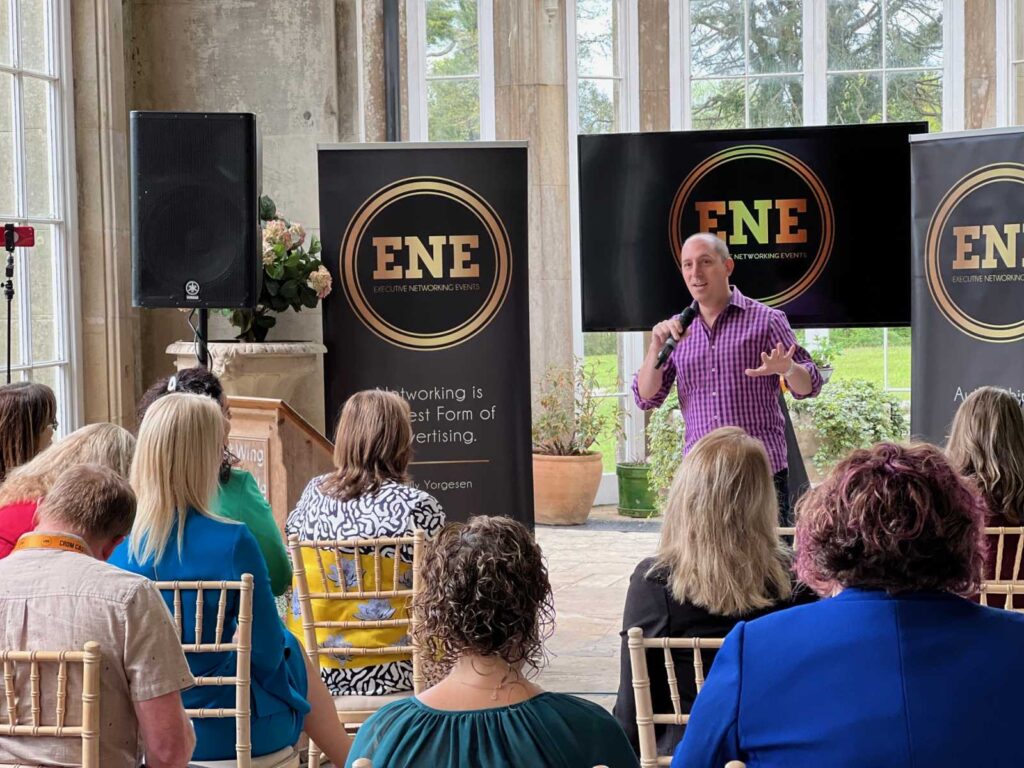
I had just finished speaking at my first event. I had spent months preparing, I had put all this time and energy teaching everything that I could, and I thought I'm going to go up there on stage and leave it all there and sell a ton of stuff. Instead, I finished my speech and everybody just stared at me with these blank looks. Several people came by and told me that it was a great speech and that they had learned so much from it, but I had absolutely zero people buy from me.
Later I was at a round table that I paid a little bit of extra money to get to eat with some of the speakers, and I was telling the main speaker, whose name was Dan Kennedy, about all the stuff that I was doing. He just shook his head at me and he said, "You are an idiot. Don't you get it? People aren't buying the thing. People are buying you. People buy from somebody they know, like and trust. The first sale is getting them to buy into you, because if they know they can trust you, then they'll buy the solution to their problems."
That's why story is so powerful. Story gets past the wall that people put up. If you've ever been at a cocktail party and somebody comes up and immediately gives you a business card and says, "I'm a realtor, are you interested in listing your house?" immediately a wall goes up, because we feel pushed upon. But instead, if you tell a story and you get people interested and they know, like and trust you, then whatever you're selling, they're going to be much more receptive to.
What makes a great story
So how do you tell a great story? Well, you have to have a lot of drama. If there's not something that sucks people in and gets people to start asking questions, then you're not going to be telling a great story, and they're going to dismiss it. One of the things that makes for this drama is a moment. So many people tell a vague story, they talk in vague generalities. Instead you want a specific moment: it was three years ago, it was a Monday, I had just gotten off from work and I knew that I could not work another day in my life. See how that creates some drama? You're asking why, what caused that. You want to talk about specific moments, because that's how you get the details.
The story arc: pain, light bulb moment, exciting tomorrow
The story arc has three pieces, and I'm going to go through this with you because this will make a lot of sense.
The pain
The first part is the pain. Whatever the pain points are that your ideal customer has, you want to make sure to draw those out in the story. It's what their life is like. I'm going to use weight loss as a frame for this, but it works with any business. Six months ago it was really hard for me to get out of bed. I would roll over and hit snooze and say just five more minutes. I'd get in the shower, get out, start to get dressed, and my clothes fit really tight. But it seemed like no matter what I did, I couldn't lose weight. You want this to be about 50% of the story, and you want to talk about specific moments: the moment when I was in bed, the moment when I was in the shower, the moment when I was getting dressed. What you're doing right here is building relationship with your ideal client, because they are instantly going to see, "oh my goodness, that person is just like me."
The light bulb moment
Then you want to show them the light bulb moment. The light bulb moment is the tipping point in the story, when you start to solve your pain points and move forward. So one day I met my friend for coffee, and he looked really good, he'd lost a lot of weight. I asked him what was going on, and he told me that he had found this diet where he could eat all the bacon that he wanted and all the steaks that he wanted, and it caused fat to just melt off of his body. See how this is starting to get them curious, starting to get them to ask a question? The light bulb moment should be about 10%.
The exciting tomorrow
Then the next part of the story is the exciting tomorrow. The exciting tomorrow is where you paint the picture of what life is like after the light bulb moment, after they've solved the problem. I did this keto diet and sure enough, in about six weeks I had lost 30 pounds, my clothes fit amazing, I actually had to go buy new clothes, and I had all this energy. Now, one of the mistakes that people make is they talk about the journey from the light bulb moment to the exciting tomorrow. The thing is that's not sexy, that does not sell. What is the journey? Well, I had to count calories, I had to work out, and people are like, "I don't want to do that." You're selling the vacation, not the trip. The less you talk about the trip and the more you talk about the end result, the more people are going to lean forward. So the exciting tomorrow should be about 35%.
The hook and the call to action
You might be saying there were five parts and that's only three, and you're right. After you've told the story, you want to come up with what is the biggest piece that causes raw curiosity and will get somebody to lean in, and you pull that out for the hook. We'll call it 2%. The hook is a state break, because what you want to do is stop everything that's going on in their head and get them to listen to the next 20 to 30 seconds, which is where you start talking about the pain. At the very beginning of this I did that: I said I was standing on stage and I had hundreds of people staring at me with blank faces, and you're probably wondering why that's happening.
The next piece is the call to action. If you did your story correctly, all you have to do is put in one sentence at the end, something along the lines of send me a message, give me a call, reach out to me, click the button down below. People are going to be leaning in so hard because you already identified with them. They know that you have the same problems that they had and you were able to solve them.
The five core stories your business needs
This framework works for all five of the core stories that you need in your business.
The first one is your 15-word elevator pitch. This needs to be full of curiosity, it needs to get them to lean in, you need to call out who you work with, and you need to call out a super specific result that you get for somebody. This takes some time to craft correctly, but when done right it will help sell you the next conversation and open it up for you to tell your story.
The second story is your hero's journey, your personal story. The product or service that you created plays the second role to this. The main story is about you, your struggles, your journey to success.
Number three is your product story. For your product story, the product plays the main role: why was it created, what makes it different. You play second chair, you play the backup.
Number four is your value stories. You want to pick three, four or five main core values that you have, and then pick stories from your life that support those. This gives you content that you can use over and over in your emails, in your Facebook lives and in your Instagram posts. It will attract people to you that have the same values, and it will get people to know, like and trust you.
And the fifth story is your customer story. In your customer story you want your customer to share about their hero's journey, how they came to find your product and what your product did for them. This is basically a testimonial, but instead of just a plain, boring, vanilla testimonial, you use this story arc method and walk them through it. It's the customer telling a story, which prevents that wall that we were talking about from going up.
Key takeaways
- Only 3% of any given marketplace is looking to buy right now, and the minute you come across as salesy, a wall goes up.
- People aren't buying the thing, they're buying you. The first sale is getting them to know, like and trust you, and story gets past the wall.
- A great story needs a lot of drama and a specific moment, not vague generalities.
- The story arc is the pain (about 50%), the light bulb moment (about 10%) and the exciting tomorrow (about 35%), plus a hook (about 2%) and a one-sentence call to action.
- You're selling the vacation, not the trip. Talk about the end result, not the journey.
- Every business needs five core stories: your 15-word elevator pitch, your hero's journey, your product story, your value stories and your customer story.
Questions people ask
Why don't people buy even when I have a great product or service?
Because you come across as salesy, and only 3% of any marketplace is looking to buy right now. The minute you start talking about features and benefits, a wall goes up. Dan Kennedy told me people aren't buying the thing, they're buying you.
How do you tell a great story?
You have to have a lot of drama and a specific moment. So many people tell a vague story in generalities. Instead say it was three years ago, it was a Monday, because that's how you get the details.
What are the parts of a sales story?
The pain is about 50%, the light bulb moment is about 10%, and the exciting tomorrow is about 35%, plus a hook that is about 2% and a one-sentence call to action at the end.
What are the five core stories every business needs?
Your 15-word elevator pitch, your hero's journey, your product story, your value stories and your customer story.
Keep reading
- Why Stories Sell Better Than Facts at Your Business Event
- The Sales Are in the Story: How to Engineer Emotional Buying
- The Storytelling Edge: How to Make Your Event Unforgettable
- Story Sequencing Secrets: Why Order Matters More Than You Think
Watch me build out the full story framework in the video at the top of this page.