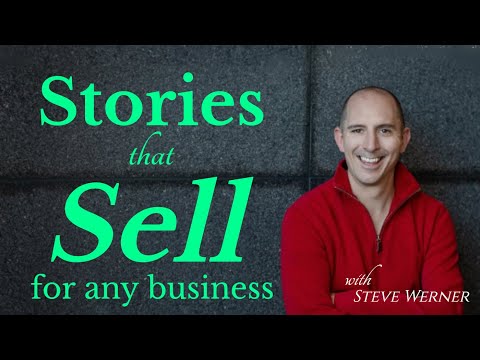
Today I'm going to walk you through the process that I've used for the last five years to build, hold, fill and sell at profitable live events. For the last five years I've held my own live events and done really well with them. About six months ago I went out on my own and started helping people hold their own events. I've worked with five one-on-one clients, and in the last six months they've done more than $1.2 million in topline revenue. I'm here to share the secrets that I used with them to help them hold their events.
The process that I use when I'm looking to help somebody hold an event is called the platform process. Let's walk through it.
Pick your event
The very first thing you need to do is pick your event. There are three different kinds of events that you can hold, and it depends on where you are at in your business journey, in your entrepreneurial journey.
If you're an influencer and you have a huge tribe, it's going to be a large stage event held at a hotel, 100, 150, 250 people. It does not have to be that way, though. When I got started, the first one I tried to hold was a thousand-person event, and I completely bombed. What I figured out is people actually like smaller events better. I hand out feedback forms at every event that I do, and all the feedback forms pointed towards we want smaller, more intimate events, where we can help people, where we can talk to the speakers, where we can get our questions answered, where we don't feel like we're just one in this huge crowd.
The Mastermind event
So I started going towards holding smaller events, and I call these Mastermind events. They're events where you can put 15 to 25 people in a room. You can hold the event yourself. You don't need a huge staff, you don't need AV, you don't need all the stuff that goes into that. It's a much easier event to hold. And here's the secret: when you hold events like that, you can close a much higher percentage rate, somewhere between 50 and 75%, even all the way up to 100%. Two ladies that I helped in the last six months put 14 people in the room and they closed 13 of them, 13 people on an $18,000 product.
These events are so incredibly powerful because they sell out super fast. You can fill the room, you don't have to stress about anything, and you can do them more often than you can do the large event because they're so much easier to put on.
The workshop
The last one is a workshop. If you're an agency owner, or if you have some kind of high-end deliverable, the workshop is where you make your money. You can charge anywhere between $5,000 and $20,000 for a few people to come into your workshop. If you're a funnel builder, this is perfect. I've done a few of these where I built somebody a funnel, we did video for them, we gave them a head shot, we brought a copywriter in, and we built their whole funnel on a weekend. If you're already charging maybe $10,000 to $15,000 for a funnel, imagine putting three people in a room for the weekend and charging a premium because you're going to work with them one-on-one and get it done. That is an outcome-driven event.
Lock in your offer
The next thing you want to do is lock in your offer. If you're doing a workshop, it's your outcome. You want to figure out where you're taking people. You want to start with the end in mind, because that is going to inform everything that you do to put the right people in the room from the very start.
I suggest getting a whiteboard and brain dumping everything that you can think of that those people want. Then go to the red ocean, go look at what else is in your marketplace that people are buying right now. If you look at those things and start to list them out, you're going to see similarities. So how do you set yourself apart? One thing is you have your unique personality and your spin on how you're going to present those things. The second thing is that you're building an offer. It's not just one thing, you're going to get several things. An offer usually contains a vehicle, an internal and an external, and it's usually six things. It could be a course, a year-long coaching program, the templates, the course modules, audio, coaching calls. Brain dump all of that out, look at what is in your red ocean and what's selling, put some of that in there, and then put things in there to improve that. That's how you come up with your offer.
Attract your attendees
Next you want to attract your attendees. That means you go out and you drop pieces of this. You talk about the story arc that you're taking people on. You have the people over here and they want to go over there, which is happy land. There is a path to get there, and that story is the drama. It's overcoming the pain points that they have.
So you want to talk about the pain points that they are experiencing right in their life. Let's say this is weight loss. Maybe you're overweight right now, maybe you don't wake up with a lot of energy and you don't have a lot of free time, and you're trying to figure out how you can lose the 25 to 30 pounds that you need to lose to get back to feeling yourself. You want to talk about the pain, and then you want to take them on this journey, but you also want to point out the things that you can do to help them get there.
You can put this stuff out on Facebook, you can put this out on any social media platform. You don't want to run ads directly to your event. That's the worst thing I can possibly recommend that you do. So many people call me and they're like, hey Steve, I've got like three weeks and right now I have five people registered, what do I do? Usually the reason is because they've been running ads directly to a sales page. Instead you run it to the story arc, you talk to people about the story.
Tell the story
Next you want to tell the story. You have two things here. You have the story arc, which is emotion, and you have the success path, which is logic. The success path means this is step one, you do these three steps in order, and then when you're done you go on to step two, and step two has three things that you do in order, and then you go on to step three. These two parallel each other. Step one is usually how you reach the first rung, you overcome those first objections, you overcome those first pain points, and you reach step two.
Emotion is what causes people to buy, and that's where you want to hook people in. That's the stories that you want to tell. But you want to point out that you have a clear logic-based solution. You want to talk a little bit about the logic-based solution, but a lot about the stories.
My story
Five years ago I used to work in restaurants. I was a waiter and then I worked my way up to being a manager, and I knew how to run great events. People always told me, this was a great event, I wish all of our events ran like this. So I thought it was going to be super easy to go out and run an event. I quit my job, I moved to Las Vegas because that's the event capital of the world. I went down to Treasure Island, I plunked down a huge amount of cash, and I rented a room for a thousand people. Two months later I had two people registered and no money left. I had to cancel the event. Treasure Island let me out of it, I had to move into a friend's utility closet, and I wasn't sure what I was going to do.
I started learning all about events. I went to the library a lot, I was reading Dan Kennedy stuff. I took the last credit card that I had, I went back to Treasure Island, they rented me a room for 150 people, and it took everything I had to fill the event. I sold that event out in about six weeks. It was a dental event. I didn't know to sell anything at the end of it. I didn't know about the offer, I didn't know about these different kinds of events. I made about $8,500 and I thought I was awesome. Then I went to a Dan Kennedy event, and if you know Dan Kennedy, he's a crotchety old guy, and he told me I was an idiot because I didn't sell anything.
So I went back to the drawing board and I came up with my offer. I held another event at 400 people, which was crazy to think I put that many people in the room for my second event, but I did it because I was a hustler. I sold them some stuff at the end and I ended up making about $28,000, which still wasn't great, because I didn't know how to do a high ticket and I didn't believe that I could. As the years progressed I got better and better. I got to the point where I was holding these smaller events, I was charging people upfront to come to the events, and then I was selling a high ticket at the end of it. When you have 15 people in the room and you connect with each one of those people in an intimate way, your close rate is going to go through the roof. I've had three events where I've closed 100% of the room.
You're going to tell this story in your ads, you're going to tell the story in your marketing, but you're also going to tell the story at the event. People always ask me, what should I talk about at my event? This is one, this is two, this is three, and you have it all planned out. Because you're giving short versions of that leading up to the event, people know what to expect and they're really excited. They will lean in really far, because you're giving them the behind the scenes and all of the secrets.
Find the venue
A lot of people think it has to be a hotel. Here's the thing about a hotel: they're going to charge you a lot of money for the space, then they're going to charge you money for food and beverage, and then they're probably going to charge you service taxes and all these fees on top of it. It gets expensive. There are ways that you can get the venue for free if you pay for a little bit of the food and beverage, or you can get the food and beverage for free if you pay for the venue.
But there are better places to hold a small, intimate event like this. You can rent a house, rent a mansion. You can hold it at a co-working space. There are awesome co-working spaces all over the US, and they will usually rent you the space very cheaply. This also allows you to bring in catering, and catering is way cheaper than food and beverage from a hotel. The other option is the business center. If you're a member of your chamber of commerce, they probably have a business center that you can use. In Las Vegas they charge a small fee, in Phoenix it's free. They're usually very low cost and they're nice.
Outline the event
Outline the event goes with telling the story. You take the success path and you lay it over the story arc. When you do that, you're going to be able to lay out your event, day one, day two, and you're going to figure out when your pitch is. There's a certain time that you should make your pitch, and most people get this wrong. If you do this process correctly, people will just lean over and fall into what you're doing. You do not have to work them very hard, and you shouldn't. If you are ethically selling somebody, you should not have to push them and push them and push them. Instead you should give them enough that they just come to you.
Remove the sales pitch
The next piece is you remove the sales pitch altogether. You don't want to have a hardcore sales pitch. Instead you lay everything out in a way that just makes people move towards you. If you're telling the story correctly, when you tell people about the epiphany that you had, people will just want to work with you, because they've seen that you started where they are and you went to where they want to be, and you're showing them the path. Remember, they are the star in this story, you are just the guide.
Hold the event and turn it evergreen
The last piece, after all of this is done, you hold the event. And then you want to turn it evergreen. You want to film the entire event, and then you want to chop it up and turn it into a course. You want to make a book out of it, maybe turn it into a bunch of blog posts. When you do an event, you should have a minimum of 90 days of content, possibly a year's worth, plus a free-plus-shipping book, plus a course, plus lead magnets. All of that comes from an event, and that's why it's so powerful to hold a small event.
A small event is going to cost you less than $3,000, maybe $4,000, and you're going to get all of this stuff out of it. At the end of your event you should be selling a high ticket item, which is something more than $10,000. That means you are going to profit a huge amount. The lowest amount that anyone I've worked with has profited has been about $75,000, all the way up to $170,000. It is 100% possible to hold a massively profitable live event.
Key takeaways
- There are three kinds of event: a large stage event if you have a huge tribe, a 15-to-25-person Mastermind if you're starting or midsize, and a workshop where you charge $5,000 to $20,000 for a high-end outcome.
- Smaller Mastermind events close a much higher percentage, somewhere between 50 and 75%, even up to 100%. Two ladies put 14 people in a room and closed 13 on an $18,000 product.
- Lock in your offer first and start with the end in mind, because that informs everything you do to put the right people in the room.
- Don't run ads directly to your event. Run to the story arc and talk to people about the pain points they're experiencing.
- Tell the story in your ads, in your marketing and at the event. Emotion is what causes people to buy; the success path is the logic.
- A small event costs less than $3,000 or $4,000, and you turn it evergreen into 90 days of content, a course and a book. Sell a high ticket over $10,000 at the end and you profit a huge amount.
Questions people ask
How many people should be at a live event?
When I got started I tried to hold a thousand-person event and I completely bombed. All the feedback pointed towards smaller, more intimate events. I call these Mastermind events, where you put 15 to 25 people in a room. You can hold the event yourself, and you can close a much higher percentage, somewhere between 50 and 75%, even up to 100%.
Should I run ads straight to my event?
No, that's the worst thing I can possibly recommend. So many people call me with three weeks left and five people registered, usually because they've been running ads directly to a sales page. Instead you run it to the story arc and talk to people about the story and their pain points.
How much does it cost to hold a small live event?
A small event is going to cost you less than $3,000, maybe $4,000, and you get 90 days of content, a course and a book out of it. At the end you sell a high ticket over $10,000, so you profit a huge amount.
What should I talk about at my event?
This is one, this is two, this is three, and you have it all planned out. You take the success path and lay it over the story arc to lay out day one and day two, and you figure out when your pitch is.
Keep reading
- Choosing the Right Event Type
- Why Smaller Events Convert Better (And Save You a Fortune)
- Navigating the Maze of Event Venues: A Practical Guide
- 3 Proven Ways to Fill Your Live Event (Without Wasting Money on Ads)
Watch me walk through the entire platform process in the video at the top of this page.