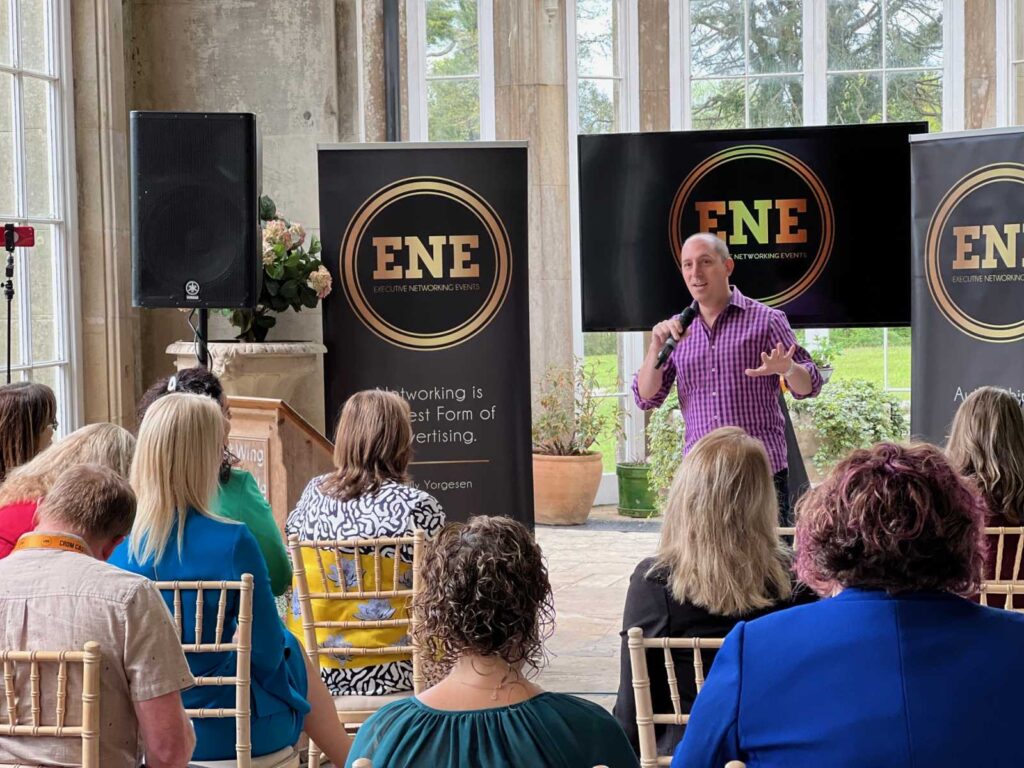
Your deck has almost nothing to do with the amount of conversions that you get on your webinar. I remember the very first presentation that I had to give. I was so stressed out, I was super excited, I had all that nervous energy spinning around inside of me. It was about 40 people and I was talking about how to put on a live event. I put together a really rudimentary slide deck and I thought it was going to be enough. My presentation completely bombed. People were falling asleep. I left there without making any sales and without really having any conversations.
Now, with webinars, I have deconstructed more than a hundred different webinars to figure out exactly what sells. I also was picked out of more than 2,500 applicants to do the ClickFunnels stage presentation, and I've done that presentation more than 150 times, both virtually as a webinar and on stages around the US. I got personal training from Russell Brunson himself. I also got trained for the stage by Joe Polish, Dan Kennedy and Frank Kern. So I put a lot of time and effort into learning what causes conversion, and let me tell you, it has almost nothing to do with your deck.
1. Stories sell
The very first thing that you need to know is that stories sell. You need to be able to tell stories in a way that get people excited about what you're doing. Think for a second about your favorite high school teacher. All the other teachers probably taught more than your favorite teacher. Your favorite teacher was more interested in building rapport and in making learning fun. That's what you need to do on your webinar. It's not the amount of knowledge that you teach, it's how you teach a little bit of knowledge. Make it engaging, make sure that people can see themselves being future paced and see how they can use it.
A good webinar has more than 25 stories in it. The really great ones have more than 50. Some of them are a sentence or two long, some of them are a paragraph, some of them are 30 seconds, some of them are 3 minutes. A great webinar has a ton of stories built into it, and that's actually the preferred teaching mode.
2. Language patterns
The second thing is language patterns. The way that you say things, the way that you connect things throughout your webinar, is the difference between people falling asleep and people actually paying attention. Did you know there are 10 different tonalities that you should be using in your webinar presentation? Most people have two or three at most, and they're not intentional about it.
The other thing is how do you make people feel good but at the same time realize that they need to buy. Nobody likes to be told that they need anything. A real easy tip is to say "you want." You want this outcome, you want to make more money, you want to have more free time, you want to have more business, then you are going to love my course. That sounds much different than "need." Language patterns are what got Brendon Burchard and Tony Robbins up on stage. It's also what causes the audience to buy a lot of their products.
3. Overcoming objections
Number three is overcoming objections. I see so many people get so busy teaching and throwing out all the different things that they want people to learn, pushing all this massive amount of volume. Instead, you should be focusing on teaching a little bit and then figuring out what their objections are. Why do people not want to move forward? What is holding them back internally? If you come up with that, you can figure out how to overcome objections as they come up, through stories, through changing the frame.
The way you change the frame is you agree with them. You might be thinking that it would be really difficult to give a webinar like this, but the truth is, with just a little bit of practice, you too can be giving really powerful webinars. Do you see how I just reframed it right there? If you watch Russell Brunson's webinar, he does this more than 23 times, constantly switching people's frames and overcoming objections. By the time you get to the pitch, they have nothing to stop them from buying. If you overcome their objections as you're moving through the webinar, you will make quite a bit more sales.
4. Creating the offer
Next up we have creating the offer. Your offer should have at least six components, if not more. You should have your main offer at the top and then all the supporting pieces underneath of it. Here's the trick with your main offer: you want to get that up on the screen and out into the open within three minutes. You want to get it out there as fast as possible.
Because what happens is, when you make that offer, 10% will say yes and they'll buy right now because they're leaning forward so hard. 10% are never going to buy. But the other 80% are leaning in, because you've told good stories at the start and because you've helped them overcome objections. They're on the fence, and their subconscious is saying, "I really want it, but I need a little bit more convincing." All of the other pieces of the offer are meant to get them off the fence. Here's a pro tip: somewhere in your stories out in the front of the webinar, you want to have opened a loop to something that is in your stack. By doing that, you then close the loop when they buy, which will also lead to more selling.
5. The funnel, the landing page and the follow-up
Those are the main pieces of the webinar that cause conversion, but something we didn't talk about was the funnel, the landing page and the follow-up. Right now, one out of five people is actually showing up for the live webinar. You can raise that by having a better funnel and a better landing page. You want to create as much raw curiosity as possible to get them onto the webinar.
I would actually do a live webinar a couple times, because if you have 20 people on live, your energy is going to come across and you're going to close a higher percentage. Plus it's going to help you get better at presenting, because that is the key: telling the stories, using the language patterns, overcoming the objections. All of that gets better as you do it.
Next up is the follow-up. There are nine different ways that great webinars follow up with people, and most webinars sadly only use one or two. A great email follow-up sequence has eight to 10 emails that go out. They're also using text messaging, they're using Facebook Messenger, they're using voicemail drops, they're calling people and getting them on the phone, they're doing Q&A sessions. They're doing all the things that you can do to get people that are sitting on that fence.
Key takeaways
- Your deck has almost nothing to do with the amount of conversions that you get on your webinar.
- Stories sell. A good webinar has more than 25 stories in it, and the really great ones have more than 50.
- Use language patterns and 10 different tonalities, and say "you want" instead of "you need."
- Overcome objections as you move through the webinar by changing the frame, so by the time you get to the pitch they have nothing to stop them from buying.
- Get your main offer up on the screen within three minutes. The other pieces of the offer are meant to get the 80% on the fence off the fence.
- Raise your show-up rate with a better funnel and raw curiosity, and follow up in nine different ways, not one or two.
Questions people ask
What actually makes a webinar convert?
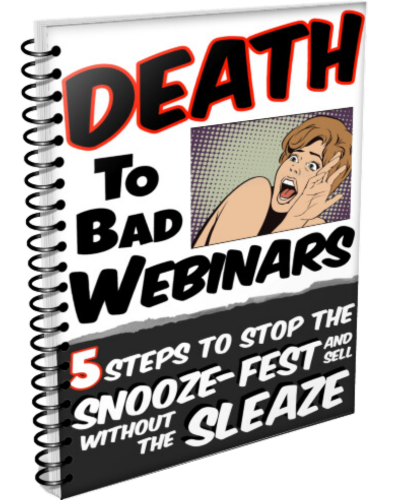
It has almost nothing to do with your deck. The five things that cause conversion are stories, language patterns, overcoming objections, creating the offer, and the follow-up.
How many stories should a webinar have?
A good webinar has more than 25 stories in it. The really great ones have more than 50. Some of them are a sentence or two long, and some of them are 3 minutes.
When should I make my offer on a webinar?
You want to get your main offer up on the screen and out into the open within three minutes. You want to get it out there as fast as possible.
Why don't people on the fence buy right away?
When you make the offer, 10% buy right now and 10% are never going to buy. The other 80% are leaning in but on the fence, and all of the other pieces of the offer are meant to get them off the fence.
Keep reading
- Are You Teaching Too Much? How to Open Loops Instead of Closing Sales
- If You Wait Until the Pitch to Overcome Sales Objections—You're Already Too Late
- This 7-Part Offer Framework Is Behind $20M+ in Sales
- Why Stories Sell Better Than Facts at Your Business Event
Watch me walk through all five things that cause conversion in the video at the top of this page.