
If you’ve ever hosted a webinar that didn’t convert, your first instinct was probably to blame the easiest visible object in front of you: the slide deck.
Maybe you opened PowerPoint, redesigned every slide, polished the colors, cleaned up the fonts, added stronger visuals, or even rebuilt the entire presentation from scratch. Maybe you studied keynote-style polish or watched a podcast interview with a “webinar expert” who swore the right slide framework would solve everything.
Then you hosted the session again…
Delivered the exact same knowledge…
Put in minutes of focused preparation…
Pressed “Go Live”…
Presented with confidence…
Pitched your offer…
And still, conversions didn’t move.
This is the moment most entrepreneurs start Googling phrases like “webinar mistakes to avoid,” “why webinars don’t convert,” or “how to build a high-converting presentation.” They assume the killer of their conversions must be the slide design, the tech, the transcript, the funnel tool, or the latest automation glitch.

Pop in your email below, and we’ll zip it straight to your inbox so you never lose it!
But here’s the truth that experienced sales strategists already know:
Your slides are almost never the reason your webinar isn’t selling.
In fact, webinars aren’t dead. Far from it. They still outperform most B2B and B2C sales presentations when structured correctly. Some of the highest-performing funnels today still rely on webinars because buyers crave meaningful insight before making decisions. They want real-time interaction with a host who understands their problem and can guide them toward the right solution.
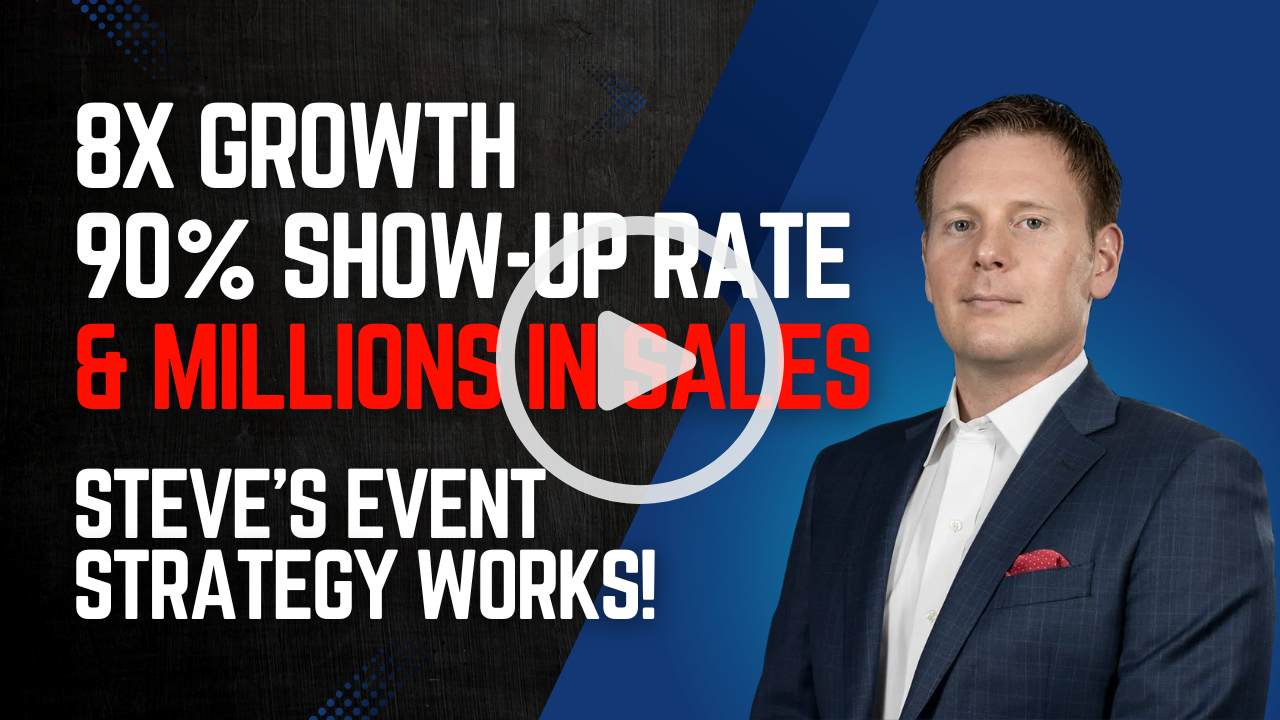
Webinars can convert twenty to forty percent of qualified attendees when the structure, timing, and storytelling are dialed in. The medium still works. The sales strategy behind it determines everything.
So if webinars work…
Why isn’t yours converting?
Let’s discuss exactly why—and what to do about it.
The Real Reason Your Webinar Isn’t Selling
Slides do not sell.
Structure sells.
Storytelling sells.
Belief sells.
Interaction sells.
Engagement sells.
Urgency sells.
Clarity sells.
Slides support all of that, but they don’t create it.
The reason most webinars fail is because the buying journey is broken. The audience’s attention isn’t guided. The pitch feels bolted on. The host is teaching but not shifting beliefs. The buyer can’t see a clear path toward a decision. The experience isn’t compelling enough to drive action.
This is why you can take the same slide deck, give it to two different hosts, and watch one convert and the other struggle. It’s not the presentation graphics. It’s the experience you architect around them.
Let’s break down the real conversion killers.

Mistake #1: Teaching Too Much and Selling Too Little
This is one of the most common webinar mistakes to avoid.
Most experts want to prove their value. They “give away” too much. They treat the webinar like a full training session instead of a strategic sales experience. They unintentionally overwhelm their audience with content that should have been simplified, stacked differently, or split across multiple events, podcasts, or demos.
Here’s why this matters.
When you overload a buyer’s brain with too much teaching, they experience cognitive fatigue. When cognitive load goes up, the ability to decide goes down. Even if your content is brilliant, your audience’s mind is so full that making a purchasing decision feels emotionally impossible.
This is exactly what happened with Jenn, one of my clients. Jenn had strong content, a polished slide presentation, and the willingness to deliver hours of value. But her webinar simply didn’t convert. After restructuring the session—removing unnecessary content, adjusting timing, and clarifying her story arc—her very next launch converted at ten percent. Her second run converted at fourteen percent.
Her deck barely changed.
What changed was the strategy.
Mistake #2: No Emotional Arc or Belief Shift
A webinar is a sales presentation, not a college lecture.
People don’t attend webinars because they crave information. They attend because they want transformation. They want clarity. They want hope. They want a path.
The biggest misunderstanding entrepreneurs have about webinars is that information persuades.
It doesn’t.
Emotion persuades.
Storytelling persuades.
Belief shifts persuade.
Seeing a meaningful testimonial persuades.
If your audience doesn’t experience any emotional movement during your webinar, your pitch will always feel disconnected. And when you’re pitching from a place of low emotion, your conversions suffer.
To sell effectively through a webinar, you must shift five beliefs:
Why Me
Why This
Why You
Why Now
Why Not
A slide cannot do that. Only story, structure, and experience can.
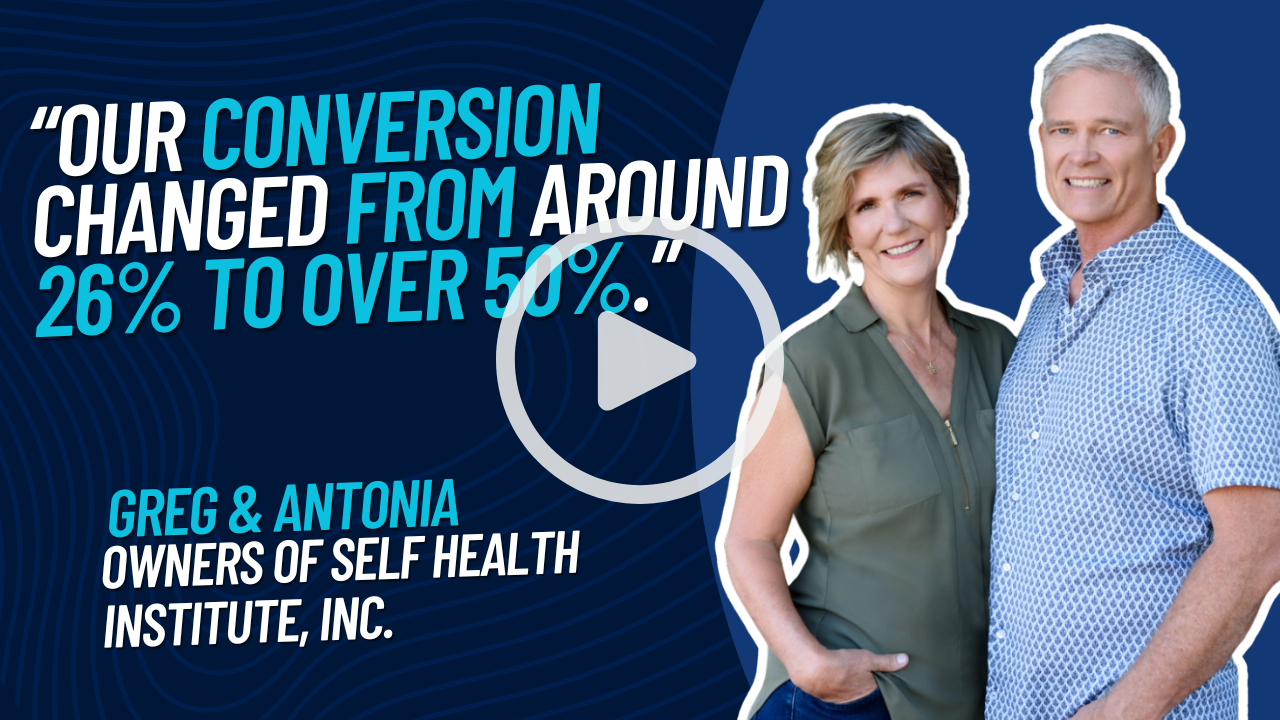
Take Greg and Antonia—another pair of clients whose webinar was already “pretty good.” Their content was excellent. Their deck was polished. But emotionally, the audience wasn’t being guided toward a decision. After adjusting their storytelling, increasing real-time interaction, and reframing their teaching to highlight stakes and urgency, their conversions doubled.
The webinar wasn’t broken.
The emotional arc was.
Mistake #3: Low Interaction and Flat Energy
A webinar without interaction is just a recorded video.
And people don’t attend live sessions to watch videos. They attend because they want real-time interaction with a host who can respond to them, read the room, and create a meaningful experience. They want to chat, ask questions, respond to prompts, participate in a poll, feel seen, and be part of something.
When energy drops, conversions drop.
When the host reads slides like a transcript, conversions drop.
When the room feels passive, conversions drop.
Studies consistently show that webinars with deliberate interaction—chat discussions, polls, Q&A, prompts, demos, even small moments of personalization—keep more people engaged and dramatically boost conversion.
This is why the role of a strong MC or high-energy host is crucial. You are not just teaching. You are leading. You are guiding attention. You are creating urgency. You are compelling the audience to stick around through the entire session.
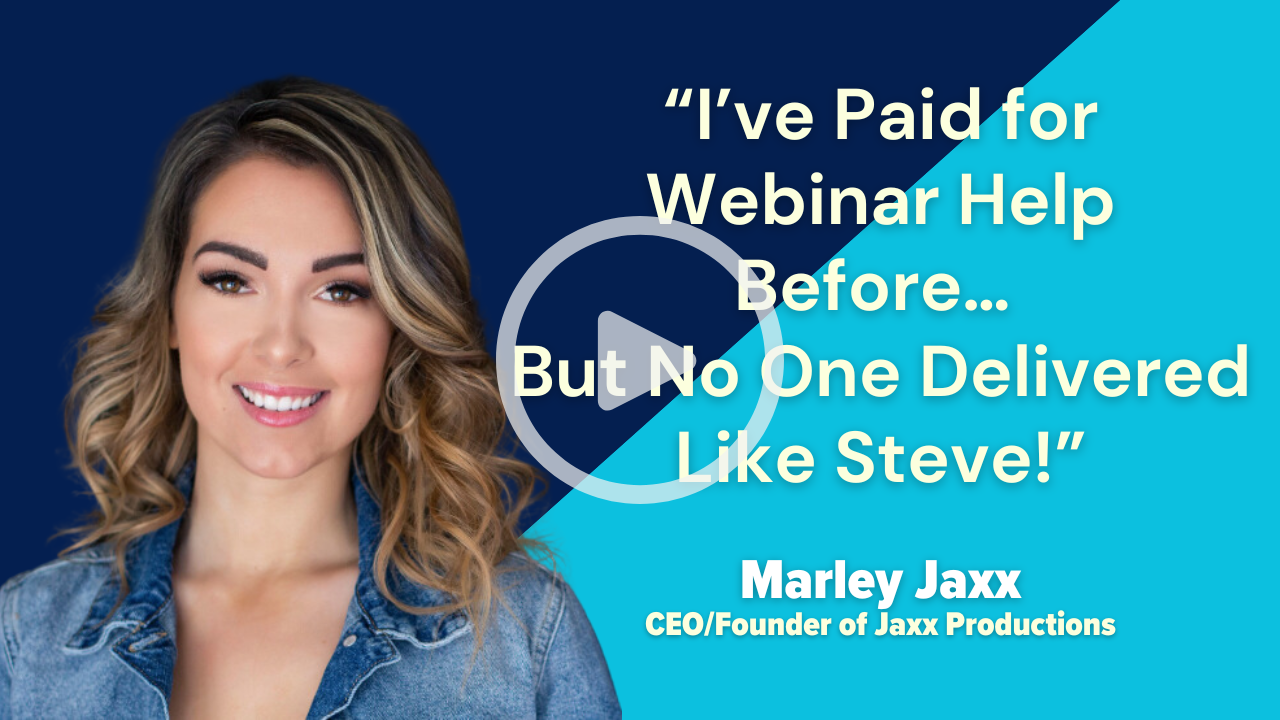
This is exactly what we did with Marley. Marley was already running visually impressive webinars. Her deck looked great. But the energy of the room didn’t match the power of her offer. After restructuring her delivery, pacing her storytelling, and inserting intentional moments of audience interaction, people were literally typing that they were on the edge of their seats.
Again: same slides.
Different experience.
Higher sales.
Mistake #4: Bolting the Pitch Onto the End
If your pitch only happens in the final ten minutes, you’re pitching too late.
A high-converting webinar doesn’t introduce the offer at the end of the session. It builds toward the offer from the very first slide. Every story, every insight, every example, every demonstration is designed to position the buyer emotionally before you ever reveal the investment.
This is where most hosts sabotage themselves.
They teach for forty-five minutes…
Then flip to a new slide…
And suddenly the entire presentation shifts into “sales mode.”
The audience feels blindsided.
The pitch feels abrupt.
Momentum collapses.
A pitch that works feels like a natural continuation of the journey—not a hard stop.
And here’s the subtle truth: when the entire webinar is positioned correctly, your audience often knows an offer is coming. They’re ready for it. They want it. They welcome it.
This is the heart of a high-converting sales strategy.
Mistake #5: Weak Pre-Frame and Follow-Up
Your webinar’s performance has less to do with the live session and more to do with what happens before and after it.
Before the webinar, your pre-frame messaging determines the quality of the audience. If the wrong people attend, your conversion rate doesn’t matter. You could have a flawless presentation, perfect timing, and brilliant storytelling—but if the audience isn’t the right buyer, no strategy will convert them.
After the webinar, your follow-up sequence determines whether logical buyers take action.
Top-performing hosts understand this:
Replay emails often generate twenty to forty percent of total sales.
Repitches drive conversions from those who needed time.
Testimonials shared after the session reinforce belief.
Automated follow-up funnels help close buyers who need more information.
If you ignore these two stages, you lose conversions before the session even begins.
So What Actually Fixes Webinar Sales?
Now that we’ve covered the real killers of conversion, let’s focus on what actually works.
These are the four levers behind every high-converting webinar:
Lever 1: Story-Driven Structure
Your presentation must follow a powerful arc—one that builds momentum, positions the solution, and prepares the buyer to take action. Slides support this arc, but they don’t create it.
Lever 2: Belief-Shifting Content
Teaching is helpful, but belief shifting is crucial. Your content must be strategically selected to move the audience toward a decision, not simply educate them.
Lever 3: Interaction and Energy
Use chat prompts, polls, Q&A, and real-time engagement to keep attention high. Buyers stay when they feel seen.
Lever 4: Built-In Pitch Flow
Your pitch doesn’t begin at the end. It begins at the beginning. Every story and insight should gently position the value of your offer long before the price appears.
The Final Reframe
Before you redesign your slides again, redesign your experience.
Slides do not convert.
Story converts.
Emotion converts.
Belief converts.
Clarity converts.
Urgency converts.
Interaction converts.
Webinars still work.
Webinars still sell.
Webinars still drive b2b and high-ticket buyers into action.
The problem isn’t the slide.
The problem is the strategy wrapped around it.
Your Next Step
If your last launch underperformed—or if you’re building a webinar and don’t want to repeat these mistakes—your best next step is to re-engineer your structure, not your deck.
Ask yourself:
What would your webinar convert if the entire experience—not just your presentation—finally did the selling for you?